


How I Earn Yield on Solana Using Orca (SOL/USDC & SOL/USD1 Strategy)


Crypto markets are full of noise right now.
But when volatility increases, the real game shifts.
It’s no longer about chasing the highest APY. It’s about surviving, adapting, and protecting capital while still earning yield.
In this breakdown, I’m walking you through how I learn DeFi on Solana, specifically using Orca liquidity pools, and how I’m currently deploying capital across:
SOL / USDC (core position)
SOL / USD1 (higher yield position)
This is not about hype.
This is about process, positioning, and understanding the mechanics behind yield.
Why Most People Fail at Yield Farming
When most people look at DeFi, they ask:
What’s the APY?
How much can I make?
Where is the highest yield?
But that’s the wrong question.
The real question is:
What happens to this position when the market moves?
Because yield farming isn’t just about earning rewards.
You are:
providing liquidity
absorbing volatility
becoming the counterparty to traders
And if you don’t understand that, you’re not farming yield — you’re taking blind risk.
What Is Orca and Why It Matters on Solana
Orca is one of the primary decentralized exchanges on the Solana blockchain, and it uses a model called:
Concentrated Liquidity
Instead of spreading your capital across all price levels, you choose a specific price range where your liquidity is active.
That means:
Higher efficiency
Higher potential yield
But also higher responsibility
If price stays inside your range → you earn feesIf price leaves your range → your yield stops
💡 Want to Learn DeFi the Right Way?
If you’re still new to these mechanics, start here:
🎓 Free DeFi Crash Coursehttps://www.dadsdefispace.org/challenges
How Orca Liquidity Pools Actually Work
Let’s simplify this.
When you provide liquidity in a pair like SOL / USDC, your position behaves dynamically.
As price moves:
If SOL goes up → your SOL gets sold into USDC
If SOL goes down → you accumulate more SOL
This creates two key risks:
1. Impermanent Loss
You may end up with less value compared to simply holding.
2. Range Risk
If price leaves your range, your capital stops earning yield.
My Current Orca Strategy (Real Positions)
Right now, I’m running two different setups:

Position 1: SOL / USD1 (Higher Yield, Active Management)
This is a tighter-range position focused on generating higher fees.
Approx APR: ~150%+ (variable)
Strategy: Active monitoring
Goal: Capture trading fees in volatility
This position is more aggressive.
I size it smaller and manage it actively because:
Narrow ranges = higher yield
But also = higher risk
Position 2: SOL / USDC (Core Strategy)
This is my long-term, wider-range position.
Range: ~35% wide
APR: ~50–80% (variable)
Strategy: Capital preservation + yield
This is where I focus on:
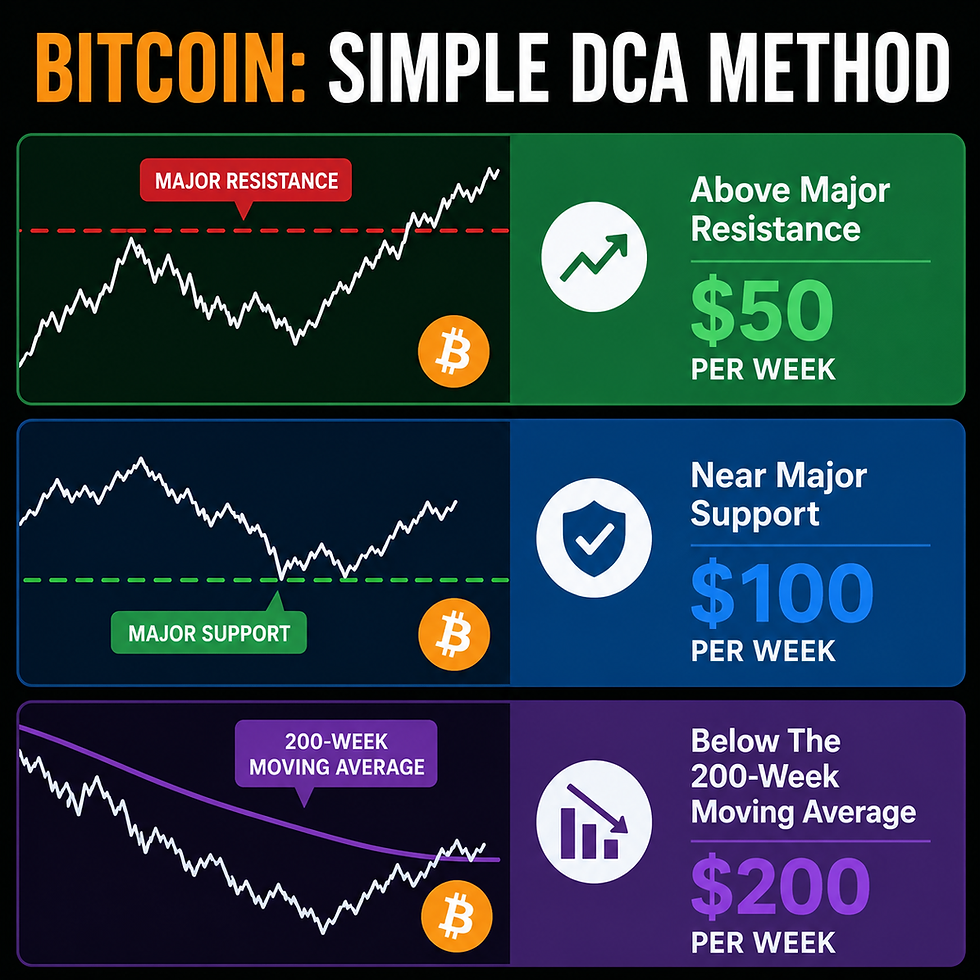
Dollar-cost averaging into SOL
Earning fees while price moves sideways
Reducing stress from constant repositioning
The Real Trade-Off Most People Ignore
Here’s the part most people don’t talk about:
If SOL explodes upward…
You will underperform simply holding SOL.
Why?
Because your liquidity is selling into strength.
That’s the trade-off:
✔ You earn consistent fees
❌ You give up some upside
And that’s why this is not a “get rich quick” strategy.
This is a system-based approach to yield and accumulation.
How I Evaluate Liquidity Pools (Important)
Before entering any LP, I look at:
1. Total Value Locked (TVL)
I prefer pools with $250K+ minimum liquidity
2. Volume vs TVL
I want at least 2x daily volume vs TVL
Why?
Because:
More volume = more fees
More liquidity = less slippage
3. Depth Matters
Shallow pools = higher riskDeep pools = more stability
Where This Fits in My Portfolio
Liquidity pools are not my core holdings.
My core is still:
Bitcoin
Ethereum
Select exposure to Solana, TAO, Base Ecosystem
LP positions are:
👉 Satellite strategies
👉 Designed to generate yield
👉 Actively managed
The Bigger Lesson: Yield Is a Byproduct of Strategy
DeFi yield looks simple on the surface.
But underneath, it’s a system of:
incentives
liquidity flows
market behavior
risk management
If you don’t understand those mechanics, yield will eventually cost you.
Build With Us (Optional — Always)
If you want to go deeper and learn DeFi on Solana and beyond, here’s where to plug in:
💬 Free Telegram (real-time insights + discussion)https://t.me/DADSDefiSpace
🎓 Free DeFi Course (start here)https://www.dadsdefispace.org/challenges
📲 Base App Profile (on-chain experiments)https://base.app/profile/dadsdefispace
🚀 Join us on Base Apphttps://base.app/invite/dadsdefispace/62YVZ0B3
📰 Web3 Newsletter (this journal)https://paragraph.com/@daddefispace
Creator Economy & On-Chain Alignment
🪙 $DADSDEFISPACE (Creator Coin)https://zora.co/dadsdefispace
🧱 Create your own token (Zora)https://zora.co/invite/dadsdefispace
Tools I Use (Optional)
⚙️ Krystal DeFi (LP + Vault Strategies)https://defi.krystal.app?r=oLHq66gQB5Vq
📢 LBank Exchange (Bonus + reduced fees)https://lbank.com/ref/5IPGV
Final Thought
Yield farming isn’t about chasing numbers.
It’s about building a system that:
survives volatility
adapts to conditions
compounds over time
Right now, I’m not chasing the highest APY.
I’m building positions that make sense whether the market goes up, down, or sideways.
Process over predictions. Always.
— KevinDADS DeFi Space
Disclaimer
Educational only. Not financial advice. DeFi carries risk including impermanent loss, smart contract risk, and volatility. Always manage your own risk.

Comments